(+48) 58 66 18 300
nexus@nexus.pl
In 2050, in accordance with all strategies and guiding documents, only broadly understood energy and hydrogen will "reign" in Europe. Broadly understood energy includes not only electricity but also energy "stored" in green ammonia and e-methanol.
The energy mix will include the production of electricity in nuclear power plants and from renewable energy sources (RES), with 20-25% nuclear energy and the rest, i.e. 75-80% from RES.

If the above is implemented, the "king" on the broadly understood energy market will not be the one who can produce it, but the one who will be able to store and process it - i.e. store and process hydrogen. An important note here - electricity producers, having the ability to store surpluses of energy produced in the form of hydrogen storage and processing, will produce hydrogen.

The Pomeranian Voivodeship has unique opportunities to store hydrogen in salt caverns. Analyzes indicate that there is the potential to offer hydrogen storage and processing services to all countries located on the Baltic Sea - ultimately, in 2050, the installed capacity in the Baltic Sea in offshore wind farms will reach approximately 93 GW.

The business model based on hydrogen storage and processing along with local production clearly shows the need to develop, at the current stage, the models of managing the hydrogen process in the Pomeranian Voivodeship – where the hydrogen may be the cheapest in Europe. And this means the need to open up to attracting investors who need green energy and green hydrogen to build  their competitive advantages. These include such industries as chemical, steel as well as industries producing new fuels, such as e-methanol or green ammonia.

The initiative to establish the Pomeranian Hydrogen Valley was announced already in October 2018. From today's perspective, it was not only the first such initiative in Poland, but also perfectly suited to the changes that were to take place in this part of Europe in the following future.
Therefore, it is worth taking advantage of the opportunities and using the region's potential to build a completely new opening to a zero-emission industry, new technologies and education at all levels.

The Pomeranian Voivodeship has a unique opportunity to build the entire added value chain of the hydrogen economy, mainly through the possibility of solving a key problem for the future energy system in this part of Europe, i.e. storing surplus energy produced by renewable energy sources.
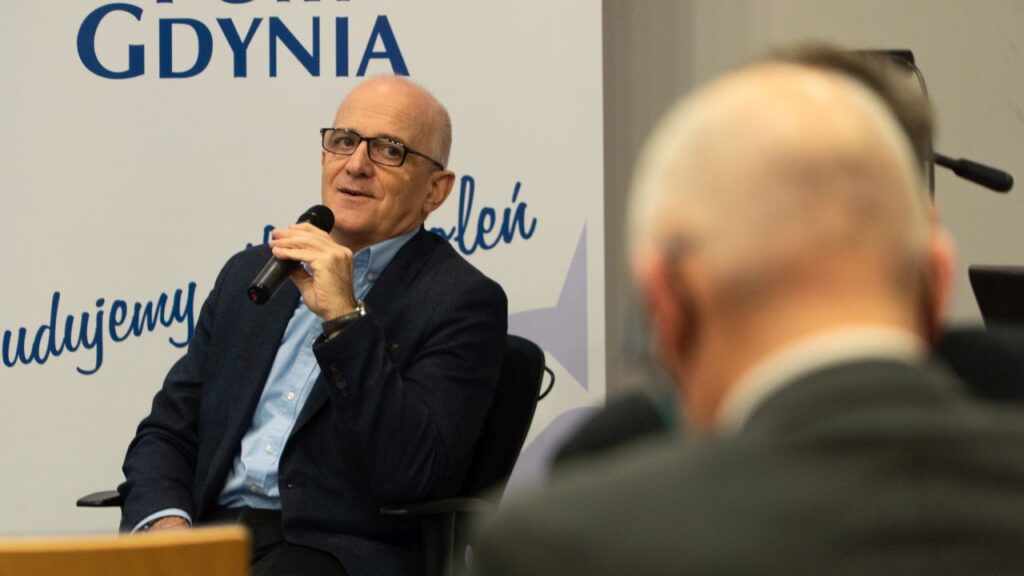
The Port of Gdynia is planning a hydrogen revolution. On Tuesday, December 14, members of the management boards of terminals operating in Gdynia and other companies potentially involved in the project discussed the project at the port's headquarters.
The meeting was held in a hybrid form - some of the guests participated in it online, while mainly representatives of the majority of terminals operating in the port were present at the premises of the Port of Gdynia Authority. The conference was opened by the host: the president of the Port of Gdynia Authority, Jacek Sadaj, who briefly presented the agenda and explained the purpose of the meeting - discussing ideas for significantly reducing emissions generated by the port by using hydrogen as fuel.
- Stimulated by EU programs, we see a number of challenges ahead of us, but also opportunities that we must take advantage of - said Sadaj.
The next part of the meeting was led by Tomasz Pelc, the owner of Nexus Consultants, one of the valued specialists in the field of hydrogen projects in industry. At the beginning, Pelc presented a project to create a Hydrogen Hub at the Port of Gdynia.
The hub would operate as part of the Pomeranian Hydrogen Valley, which consists of three projects - hydrogen-powered public transport buses in Tczew, Gdańsk, Gdynia and Wejherowo, a hydrogen railway connection between Gdynia and Hel, called "Hy-way to Hel" (currently planned as electric), and short-range hydrogen sea connections between Gdańsk and Gdynia and Hel. The center of all these projects is located in Gdynia.
Pelc said that the sea ports closest to our country are mostly green. - Many of them achieve this through hydrogen projects. Bornholm wants to be a hub for bunkering all ships sailing through the Baltic Sea. Klaipeda will also be green at any moment. The new Russian port in the Baltic Sea is also to be green - said Pelc. He also mentioned rumors that the Nord Stream 2 gas pipeline is to be prepared for the transport of hydrogen. - We are a blank spot - he concluded.
Pelc pointed out that the green ports were combined into one logistic chain - Scan-Med Corridor, stretching from Scandinavia to the Mediterranean Sea, that connected 40 different projects and ecological ports in the Baltic Sea. He also briefly discussed the hydrogen-based business models functioning in other countries, including German grants for the use of marine electrolysers to produce hydrogen or cooperation between individual companies to develop the hydrogen industry.
The most important part of his speech, however, was the presentation of the assumptions for the Hydrogen Hub at the Port of Gdynia. According to it, all equipment operating in terminals, currently powered by traditional fuels, would be replaced with hydrogen over time. - At some point you will face a dilemma: choose electrical or hydrogen equipment - said Pelc, pointing out that devices once purchased must be replaced or modernized over time. Operating costs could be lowered by integrating the local hydrogen markets within the aforementioned Pomeranian Hydrogen Valley. In this case, the Port of Gdynia would act as an animator of pro-energy activities.
Pelc also presented a very preliminary calculation of the potential demand for hydrogen in the port, which showed that 2-3 thousand tons of hydrogen will be needed annually. About half of this demand can be provided by the Lotos Pure H2 installation, which is capable of producing a total of about 1,600 tons per year. However, another source would have to be provided, but it can be assumed that with this demand, hydrogen producers would quickly queue to provide the rest. In addition, over time, the Lotos Pure H2 installation would also have to be replaced by another source, as the hydrogen it produces is referred to as gray, not green.
However, in order to be able to think about the transition from planning to implementation, you need specific information and accurate calculations. Pelc asked the terminal managers to prepare lists of their machinery and equipment, together with information about the planned decommissioning of them, in order to check whether they could be replaced with hydrogen-fueled. Based on this information, the cost of hydrogen needed by the port would be estimated. Thanks to this data, terminals could also verify whether such a change is profitable from their perspective and check operating and investment costs. Only after positive decisions from the terminals, cost optimization models could be created, e.g. the selection of common suppliers of individual types of machines and devices. Tomasz Pelc pointed out that the economies of scale may make the purchase of new equipment cheaper if it is possible to lead to a situation where the same machines will operate in the entire port, in all terminals. Additionally, in such a case, individual terminals could resign from running separate workshops - one workshop dedicated to a given type of machines in the entire port would suffice.
The city and the industry agree
Katarzyna Gruszecka-Spychała, Gdynia vice-president for economy, also spoke briefly about the development of hydrogen projects in Gdynia. She mentioned that Gdynia wants to be a precursor, as was the case with electromobility.
- We have bold plans for public transport. We also have concerns about the feasibility of their implementation. Some of them are technical, some are financial. However, in the long-term estimate, the profitability is high - she said.
Vice-president Gruszecka-Spychała also revealed that Gdynia is thinking not only of hydrogen public transport, but also of the water tram running between the districts of Gdynia and thus relieving the Kwiatkowski flyover.
After these speeches, representatives of terminals took the floor. Jan Jarmakowski from Gdynia Container Terminal revealed that the terminal plans to replace or modernize diesel-powered cranes. - In 2012, as the first Polish container terminal, we decided to enter the technology of electric drives in terminal cranes. It was the first purchase of this type in Poland - said President Jarmakowski. - We would like to modernize these seven overhead cranes and abandon diesel fuel. We analyze two solutions. One is based on the use of electricity, and we already have the infrastructure prepared for it. The second solution is the use of hydrogen propulsion. As part of the Hutchison group, we are analyzing the latter possibility. The first hydrogen crane was put into testing at the port of Shanghai. We are closely monitoring the results of these tests. We would like to implement this type of technology in the Port of Gdynia. However, we need to develop a single model for the distribution of hydrogen in the port area. We cannot think of investing in new devices without distributing this type of fuel. We have started talks with the management of the port and Lotos Goup, our diesel oil supplier, in the direction that would ensure the supply of hydrogen fuel in the port area. We would like to start the project next year.
Jarmakowski also said that the Hutchison group, to which GCT belongs, implements other projects related to hydrogen technologies in various parts of the world, such as the adaptation of the gas transmission network to transport hydrogen.
- From 2024, we will not be carrying out orders for terminal equipment working on fossil fuels. This is a direction from which there is no turning back. Financial institutions are very eager to finance projects aimed at supporting the energy transformation - concluded Jarmakowski.
- We implemented the ISO 5001 system in 2014, which is part of the bottom of the organization - energy efficiency management processes - said Wojciech Szymulewicz, president of the Baltic Container Terminal. - For many years, we have been implementing a number of projects with this common goal. I am happy to add to this list the project to include green fuel in the cycle of future investments at our terminal.
Finance and values
Tomasz Pietrewicz from HES Gdynia Bulk Terminal said that the HES International group adopted a strategy to reduce carbon dioxide emissions by 25%. One of the initiatives to support this strategy is hydrogen issues.
- The business aspect is of course important, but the values are becoming important. They have quite a significant impact on business and translate into specific actions - said Pietrewicz. - The subject of the carbon footprint appears in the discussions more and more. Maybe these are not very formal issues, at the stage of negotiations or contracts, but we see more and more often in our clients and in our group that it is embedded in a certain strategy and rules of functioning of the companies - told us the president of HES Gdynia Bulk Terminal.
The hydrogen strategy of the Orlen Group was also briefly presented by Grzegorz Jóźwiak, who is responsible for it. In the coming years, Orlen plans to become the leading producer of hydrogen fuels in the region. As part of the strategy implementation, work will be continued on hydrogen hubs in Włocławek and Płock, as well as activities aimed at the production of green hydrogen.
According to Tomasz Pelc's presentation, the Port of Gdynia may need an external hydrogen source that would cover part of the fuel needs of the terminals. Considering the fact that hydrogen, for example from Chile, is about three times cheaper than that produced in Europe, its solution may be to import it. The Alpetrol gas terminal, which currently specializes in LPG reloading, can help. The terminal management, however, is thinking about the future. The terminal could become an important point on the map of distribution of hydrogen imported from abroad, not only for the needs of the port, in Poland.
- The Port of Gdynia has the advantage that it has its own gas terminal - Andrzej Kociubiński, president of the board of Alpetrol, told us. - Today it is used for unloading LPG, but this does not mean that these competences cannot smoothly transform into competences related to hydrogen, as is the case all over the world. You have to be prepared so that you can also obtain this raw material from import. We are prepared to include our competences in the process of importing, reloading and switching from gas stations to hydrogen.
The meeting was also attended by dr inż. Capt. Wiesław Piotrzkowski, director of the Gdynia Maritime Office. He emphasized that the role of the office is to verify that all necessary laws and regulations are implemented. He also referred to the issue of finance in hydrogen investments. - The banking market is not very active so far in terms of financing in shipping, in particular in shipowners. Maybe it will be different in energy sources? On the market, we are talking about drives that already operate on ships. Recently, due to the cost of LNG, two shipowners have switched to traditional low-sulfur fuel. Finance and legal regulations play a big role - Piotrzkowski reminded.
Krzysztof Klein, representing the Lotos Group, briefly mentioned two hydrogen projects that are being developed in the group: Lotos Green H2, which involves the construction of a 100 MW installation and will ultimately produce 15,000 tonnes of green hydrogen for refineries or for the local market, and Pure H2, which is a buffer; as part of it, gray hydrogen will be produced, although pure. It will help in the transition to a carbon-free economy
- The ambition of the Lotos group and the projects implemented within the group is to satisfy the transport, energy and industry markets - said Klein.
Detailed project descriptions were presented by Tomasz Grzela, Development Director at Lotos Group.
- We are grappling with the challenge of increasing production and building production potential. Projects that have been initiated in Poland and that are somehow advanced are far too little compared to what will be needed to meet the criteria of the new regulations - Grzela began.
Tomasz Grzela mentioned that there are over a dozen hydrogen projects in several sectors of the economy implemented within the group. He described three of them in more detail. The first was the Vetni research project, carried out with the Institute of Power Engineering and the AGH University of Science and Technology. Its goal is to develop a construction of a hydrogen production installation based on the Polish idea of a solid oxide electrolyser, which allows for the production of high purity hydrogen.
- The degree of advancement of the project allows us to think about launching production on a much larger scale in the near future - noted Grzela.
The second described project was Pure H2, mentioned earlier by Krzysztof Klein, a buffer project consisting in the construction of a hydrogen purification and distribution installation at the refinery in Gdańsk and a hydrogen refueling station in Gdańsk and Warsaw. The project is also intended to test the logistics chain of hydrogen supply to the places of its use.
Green H2 is the third of the described projects. It assumes the production of raw material from the first large-scale installation for the production of green hydrogen in the country and the integration of the installation in the domestic energy market. The project is currently being transferred to a special purpose subsidiary company and will be implemented according to the schedule. In the context of talks conducted by Lotos with the Port of Gdynia, "this solution can be a perfect complement to the offer of the port and companies operating in its area as regards hydrogen fuel" - noted director Grzela.
Finally, Grzela recalled that work is underway to create a multi-energy concern together with the Orlen Group. - Gdańsk is to be one of the hydrogen technology centers created by the concern - he said.
Finally, Maciej Bąk, vice-president of the Port of Gdynia Authority, director of finance and financial management, also returned to the issue of finances. - It's nice when everything is correct in Excel. But now it may be that it won't be. However, we have a shared responsibility to deal with environmental issues. Regulators will help us in this, financing will help too. We have the slogan "We are building for generations". This is not a slogan without a foundation. I have no doubts that we must look to the future - concluded the vice-president of Bąk.
The conference, as well as the works on the Hydrogen Hub, are conducted by the Research and Technology Development Department of the Port of Gdynia Authority in cooperation with other experts.
On 09.12.2021 in the Office of Sokoły Commune a letter of intent has been signed between the representatives of TÜV SÜD Polska Sp z.o.o., Nexus Consultants Sp. z o.o., Sokoły Commune and Podlaska Regional Development Foundation. The signatories declare that they intend to establish Europe's first Agricultural Hydrogen Valley and declare cooperation in the field of promotion and education in the field of hydrogen technologies. The letter of intent was signed with the participation of representatives of local governments, entrepreneurs and local associations declaring their commitment to the creation of the Agricultural Hydrogen Valley.
Below is the list of signatories of the Letter of Intent:

NEXUS Consultants is one of the initiators of the Pomeranian Hydrogen Valley. The purpose of the Pomeranian Hydrogen Valley is to promote hydrogen and carry out hydrogen projects. The Pomeranian Hydrogen Valley was officially established on 1 October of 2019 at the Second Hydrogen Conference.
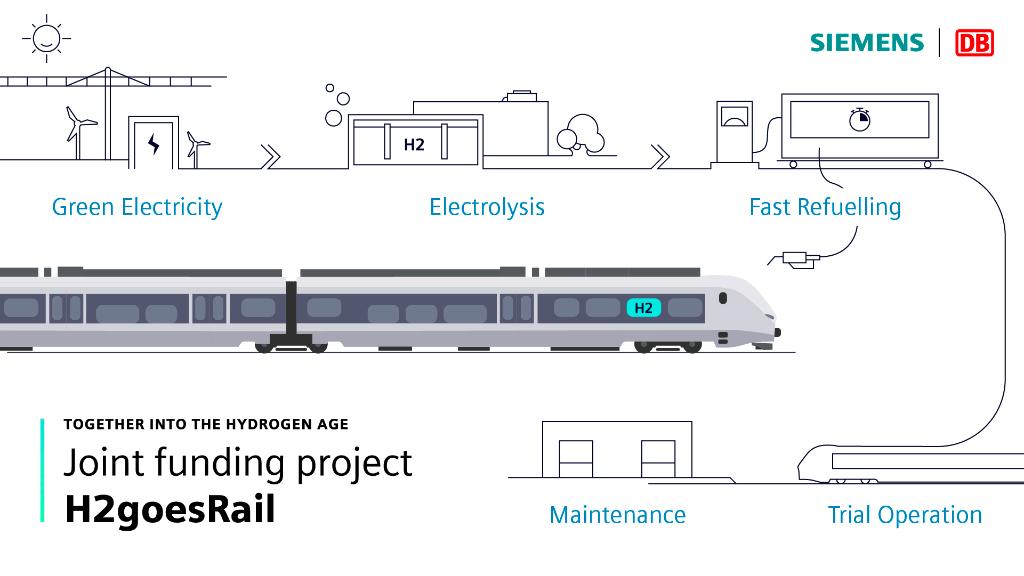
The initiative handles projects aiming to engage hydrogen in public transport. The first project covers acquisition and introduction of hydrogen-powered city transit buses. An agreement was signed in June of 2020, under which the cities of Tczew, Gdańsk, Gdynia, and Wejherowo are analysing the technological and financial potential concerning putting 56 hydrogen buses on the streets (by the year 2028). The second is the “Hy-way to Hel” railway project, which is being carried out in cooperation between NEXUS Consultants and Siemens Mobility. This project aims to introduce hydrogen-powered rail vehicles. Siemens Mobility recently announced that such trains would be introduced in Germany. Such rail vehicles may appear in Poland in the near future as well. (Reference to the Siemens press release – the comment does not appear on the page.)